Home Builder Association Announces 2026 Plan to Tackle Volatile Market with Nationwide Strategy and Regional Board Establishment, Aiming to Revive Home Building Market
‘Home Builder Association’ has unveiled its plan for 2026, continuing the vision of B-Q-O: Brand Awareness – Quality – Organization. The association is moving forward with the establishment of a ‘Regional Committee’ for the first time, starting with the northeastern and southern regions, leading efforts to organize traveling fairs to expand awareness of home construction standards to consumers nationwide. The summary for 2025 reveals that the self-built home market was valued at 190.134 billion baht, a decrease of 11%. It indicates that the ‘upcountry’ market is growing robustly, holding a 77% market share, while Bangkok and its vicinity have dropped to 23%. The association is preparing to propose three significant measures to the government: 1. Co-payment for the real estate sector, 2. Extension of tax reduction measures for another 2 years until December 31, 2027, and 3. A proposal to increase the tax deduction limit for home construction from 100,000 baht to 500,000 baht, confident that this will stimulate purchasing power and accelerate market recovery, advising consumers that ‘now is the best time to build a house’ before costs rise again.
The overall situation of the self-built home market in 2025 is projected to close at 190.134 billion baht, reflecting an 11% decrease due to economic conditions. Insights reveal that the ‘upcountry market’, led by the southern and northeastern regions, is strong, capturing the highest market share of 77% compared to Bangkok and its vicinity.
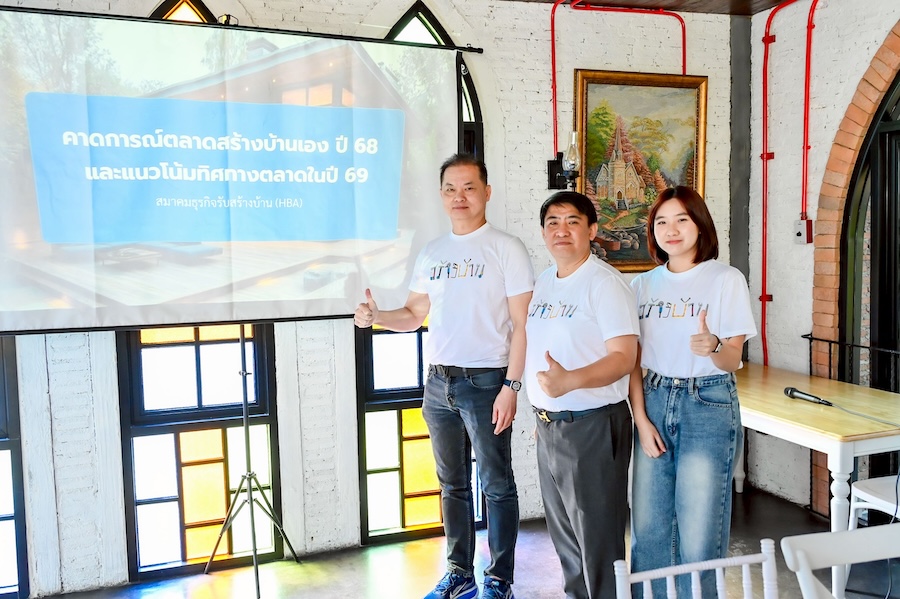
The association has announced its plans for 2026, focusing on a conservative strategy amidst a volatile economy. Following the completion of the elections and the establishment of a new government, the association is ready to present 3 measures to stimulate the home building market for the new government to consider: the co-payment model for the real estate sector, an extension of tax reduction measures for another 2 years, and a proposal to increase the tax deduction limit for home construction from 100,000 baht to 500,000 baht to reflect actual costs and build consumer confidence. This is seen as a golden opportunity for consumers to decide to ‘build a house now… it’s the best value’ before labor and material costs rise with the economic recovery.

Mr. Anantakorn Amornvatee, President of the Home Builder Association (HBA), revealed the association's strategy for 2026, stating that it will continue to build on the successes of 2025 under the B-Q-O strategy, which is crucial for the Home Builder Association and its members to sustain and grow amidst the economic crisis. This involves driving the organization through 3 key success factors (B-Q-O) that have been intensively implemented over the past year.

B – Brand Awareness (Building Brand and Awareness) has seen the association undergo a major transformation in communication towards a fully digital world, including a revamped website and active engagement across all platforms with Video Content in the first 10 seconds to effectively reach the new generation and highlight the differences in service quality between association members and general contractors.
Q – Quality (Quality Enhancement) focuses on developing “people” through a “football team” model, including MD/CEO (Coach) to foster a long-term and sustainable business perspective, Sales Team (Forwards) to develop into knowledgeable home advisors, Construction Team (Midfielders) to ensure on-site quality control to engineering standards, and finally, the Back Office Team (Defenders), which is crucial for “loss prevention” by emphasizing accurate BOQ (Bill of Quantities) and cost control to ensure profitability and stability.
O – Organization (Data and Trustworthy Organization) sees the association elevate its role to become the first Data Center in the industry, collecting and analyzing accurate data on the “self-built home market value” nationwide and breaking it down regionally to assist members in strategic planning and serve as a reliable reference source for the country.

Additionally, in 2026, the association plans to officially establish a “Regional Board” (Regional Committee) for the first time, starting in the northeastern and southern regions to carry out various activities, including organizing traveling fairs and preparing to host the first regional home building event this year. This aims to enhance communication with consumers nationwide about the distinct services offered, including construction quality and comprehensive service quality from member home building companies, ensuring that consumers looking to build homes do not encounter issues with unprofessional contractors and substandard home building companies. The association will also introduce the “MR.HO-ME” mascot to enhance communication and reach consumers nationwide more effectively.
In 2025, the market saw an 11% decline, with the upcountry market gaining a strong share of 77%.
Mr. Anantakorn stated that the overall direction of the home building business, based on statistics from 2025, estimates the total market value for self-built homes nationwide at approximately 190.134 billion baht, reflecting an 11% decrease compared to 213.360 billion baht in 2024. The primary factors remain the sluggish economy, household debt issues, and stringent lending practices from financial institutions.
Upcountry Market Thrives While Bangkok and Vicinity Slow Down
Mr. Anantakorn noted that in 2025, the structure of the self-built home market shifted from the previously dominant Bangkok and vicinity market, which has significantly contracted due to reduced purchasing power. In contrast, the upcountry market, particularly in the south, holds a market share of 18%, while the northeastern region holds 17%, both of which have shown strong growth over the past year. The provinces with the highest construction orders include: 1. Bangkok, 2. Chiang Mai, 3. Chonburi, 4. Nakhon Ratchasima, 5. Samut Prakan and Pathum Thani.
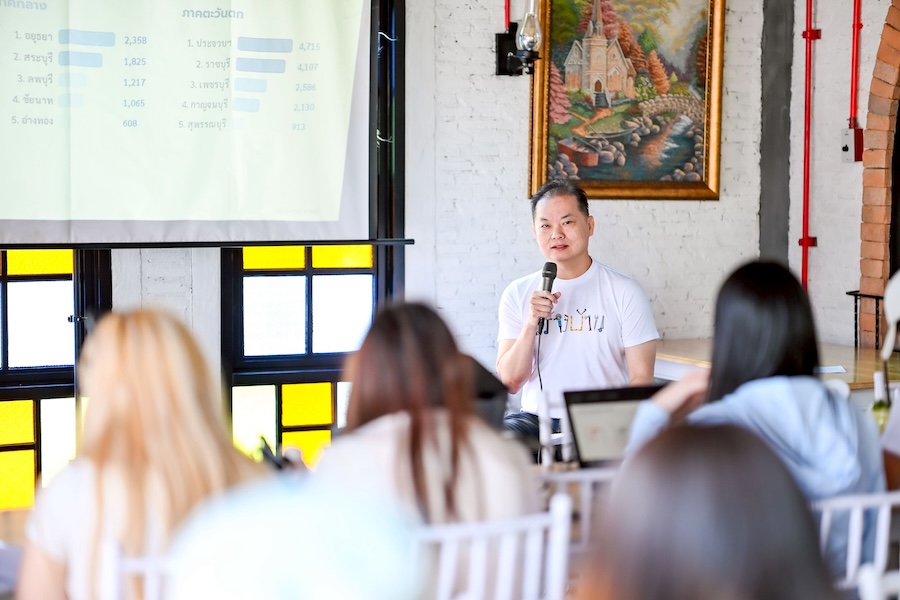
The self-built home market in Bangkok and its vicinity is valued at approximately 43.731 billion baht, reflecting a significant decline of -16% from last year’s value of 52.060 billion baht, resulting in a market share drop to 23%.
Meanwhile, the self-built home market in the upcountry is valued at approximately 146.403 billion baht, down -9% from last year’s value of 161.300 billion baht. Despite the contraction, this decline is less severe than in Bangkok and its vicinity, which currently holds a market share of 23%, while the upcountry market has risen to dominate with 77% of the total national market.
Southern and Northeastern Regions Show Strongest Growth
When analyzing the self-built home market by region, Mr. Anantakorn stated, “The home building market in the upcountry has been less affected than in Bangkok and its vicinity and continues to have a strong demand base, especially in tourist cities in the south and major cities in the northeast.”
- The southern region has a value of 34.224 billion baht, holding a market share of 18%, making it the strongest regional market in 2025.
- The northeastern region has a value of 32.323 billion baht, holding a market share of 17%.
- The northern region has a value of 30.421 billion baht, holding a market share of 16%.
- The eastern region has a value of 26.619 billion baht, holding a market share of 14%.
- The western region has a value of 15.211 billion baht, holding a market share of 8%.
- The central region has a value of 7.605 billion baht, holding a market share of 4%.
Preparing to Propose Strong Measures to Unlock Purchasing Power
Mr. Anantakorn stated that the upcoming major elections are a crucial factor that will ignite consumer confidence and restore trust. Additionally, the association has prepared proactive proposals to the government with 3 measures to stimulate the self-built home market, unlock purchasing power, and expedite market recovery.
1. The “Co-payment for the Real Estate Sector” model proposes that the government consider the “state co-payment” measure (Co-payment), such as supporting part of construction material costs or subsidizing initial interest rates to ease the burden on aspiring homeowners.
2. The association has sent a letter to the Ministry of Finance requesting consideration to extend the tax reduction measures for another 2 years, from the original end date of December 31, 2025 to December 31, 2027.
3. Preparing a proposal to expand the ceiling for “home construction tax deductions” so that those wishing to build homes can deduct construction wages from personal income tax from 100,000 baht. In the future, the association plans to propose to the government to raise the maximum deduction ceiling to 500,000 baht, which will help reduce the burden on those looking to build homes on their own land.
These 3 measures are proposed to align with the current rising costs of construction materials and labor, serving as a significant incentive for people to decide to build homes more quickly, which will stimulate the economy, build consumer confidence, and promote sustainable employment in related sectors.
“The association remains committed to maintaining quality standards and advancing the growth of the self-built home market nationwide amidst an economy awaiting recovery. The association continuously assesses the situation and is ready to be a stable partner for consumers looking to build quality homes without leaving projects unfinished. This year, we aim for a total market value close to that of 2025, approximately 190 billion baht,” Mr. Anantakorn concluded.